
Your marketing department, fully staffed.
Strategy, creative, advertising and lead generation from one accountable team, without hiring six vendors or building a full in-house function.
Serving B2B companies across the US, UK, Canada and Australia.

One team owns the whole system, not a slice of it.
Strategy
Positioning, roadmap, and the plan the rest of the work answers to.
Demand
Content, SEO, GEO, and paid channels that bring the right people in.
Conversion
Funnels, landing pages, and the offers that turn attention into pipeline.
Operations
Automation, CRM, tracking, and the reporting that proves what worked.
The problem
Marketing breaks when nobody owns the whole picture.
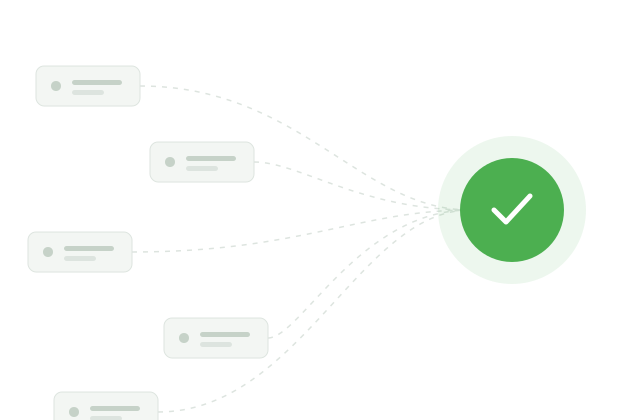
Most growing companies end up with a freelancer for ads, an agency for SEO, someone in-house running email, and a founder trying to hold it together. Every vendor optimises their own metric. Nobody is accountable for revenue.
The result is familiar. Channels contradict each other, the message shifts depending on where a buyer lands, reporting never reconciles, and no one can answer the only question that matters: is this working, and what should we do next?
What we do
Fifteen services, organised around four jobs.
Every service can run on its own or as part of a full engagement. Most clients start with one and expand once the reporting makes the next gap obvious.
Strategy and leadership
Fractional CMO, marketing strategy and roadmap, brand strategy and positioning. Senior direction that sets priorities before anyone opens an ad account.
Organic and AI visibility
SEO and content marketing, GEO and AI search optimisation. Being found by people searching, and cited by the models they increasingly ask instead.
Demand and conversion
Paid advertising, funnels and landing pages, conversion rate optimisation, campaign creative direction. Turning attention into qualified pipeline.
Systems and measurement
Marketing automation and CRM, analytics and reporting, email and nurture sequences. The infrastructure that makes growth repeatable.
How it works
What the first ninety days look like.
No long discovery phase billed by the hour. The first month produces a diagnosis and a plan you could hand to another agency if you wanted to.
01
Audit and diagnosis
We review what you already run: channels, funnel, tracking, content, positioning, and pipeline data. You get a written diagnosis of what is working and where revenue is leaking.
02
Strategy and roadmap
A prioritised plan tied to a revenue goal. Which channels, which offers, which sequence, and what we expect each to return. Nothing starts until the plan is agreed.
03
Build and launch
The specialist work begins. Funnels, content, campaigns, automation, and tracking are built to the plan rather than bolted on independently.
04
Measure and compound
Monthly reporting against the same numbers we set at the start. What worked is scaled, what did not is cut, and the roadmap updates with real data.
Why it compounds
Campaigns expire. Systems compound.
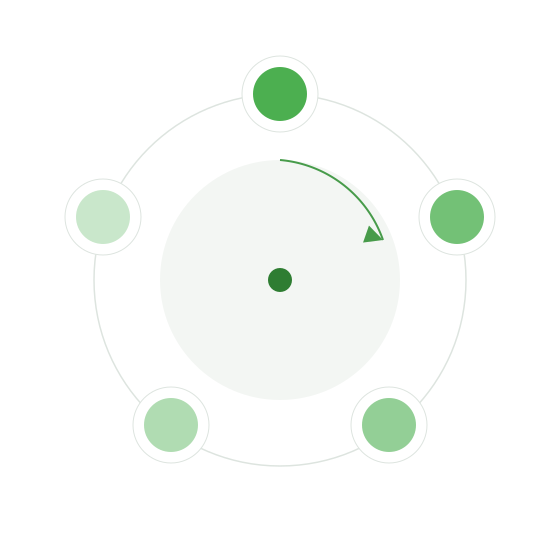
A campaign produces a spike and then stops. A system keeps returning value after the spend ends, because each part feeds the next.
Content earns rankings and gets cited by AI models. Rankings feed the funnel. Funnel data sharpens the ads. Ad performance tells the content team what messaging converts. Automation captures everyone who was not ready yet, and reporting tells us which loop to tighten.
That is the difference between spending on marketing and building an asset.
AI visibility
Your buyers are asking AI before they search.
A growing share of research now happens inside ChatGPT, Perplexity, Gemini, and AI Overviews. Those systems do not return ten blue links. They return one answer, and they cite a handful of sources.
Generative Engine Optimisation is how you become one of those sources. It needs clean structured data, entity-dense content that states plainly what you do, question-shaped pages that answer directly, and authority signals the models trust.
Most agencies are still selling 2019 SEO. We build for both, because traditional search has not gone anywhere either.
Fit
Who this works for, and who it does not.
Being direct about this saves everyone a discovery call. We would rather lose a bad fit early than manage a mismatch for six months.
A good fit
- B2B companies with a proven offer and a repeatable sale
- Founders spending on marketing without a clear view of return
- Teams with no senior marketing owner, or one stretched too thin
- Businesses selling into the US, UK, Canada, or Australia
- Companies planning in quarters and years rather than weeks
Not a fit
- Anyone looking for guaranteed rankings or leads by a fixed date
- Businesses that have not validated whether people want the offer
- Projects needing execution only, with strategy decided elsewhere
- Teams wanting the cheapest possible vendor rather than an owner
- Anyone expecting meaningful results inside thirty days
Accountability
We report on the numbers you actually care about.
Impressions and follower counts do not pay salaries. Every engagement sets its baseline in month one, and every monthly report returns to the same figures.
Pipeline and revenue
Qualified leads, opportunities created, closed revenue attributed to marketing, and cost per acquisition by channel.
Visibility
Organic rankings, share of voice, AI citation presence across answer engines, and branded versus non branded demand.
Conversion
Landing page and funnel conversion rates, form completion, drop off points, and offer performance by segment.
Efficiency
Return on ad spend, blended acquisition cost, lifetime value to acquisition cost ratio, and payback period.
Engagement models
Three ways to work with marive.
Pricing for each service sits on its own page, so you can see exactly what a given discipline costs before speaking to anyone.
Single service
Start with one discipline where the gap is clearest. Common entry points are GEO, SEO and content, or funnel and landing page work.
Scoped per project
Full-service retainer
marive owns the whole marketing function. Strategy, execution across channels, automation, and reporting under one accountable team.
Monthly retainer
Fractional CMO
Senior leadership without a full-time hire. Planning, prioritisation, team direction, and KPI ownership alongside your existing people.
Monthly retainer
Questions
Common questions.
If something is not covered here, ask directly and you will get a straight answer rather than a sales call.
What does a full-service digital marketing agency actually do?
A full-service agency owns your entire marketing function rather than one channel. For marive that means setting the strategy, running execution across content, search, advertising, funnels and email, building the automation and tracking behind it, and reporting on pipeline and revenue against agreed targets.
How is marive different from hiring separate specialists?
The difference is accountability for the outcome rather than the task. Separate specialists each optimise their own metric, and no one is responsible when rankings rise but revenue does not. marive sets one plan, runs every channel against it, and reports on a single set of numbers.
What is GEO, and is it different from SEO?
GEO, or Generative Engine Optimisation, is the practice of making a brand visible and citable inside AI answer engines like ChatGPT, Perplexity, Gemini and AI Overviews. SEO targets ranked links on a results page. GEO targets being named in a generated answer. They overlap in fundamentals but differ in content structure, schema, and authority signals.
How long before we see results?
Paid channels and conversion work can move within four to six weeks. Organic search, content and GEO generally take three to six months to show meaningful movement, and compound from there. Anyone promising ranked results in thirty days is either buying low-value terms or misrepresenting the timeline.
Do you work with businesses outside the United States?
Yes. marive serves B2B companies across the United States, United Kingdom, Canada and Australia, and works asynchronously with scheduled overlap for live sessions.
Can we start with one service instead of a full engagement?
Yes, and most clients do. Common entry points are GEO and AI search optimisation, SEO and content marketing, or funnel and landing page work. Each service page lists its own scope and pricing so you can begin narrow and expand once reporting shows the next gap.
What happens in the first month?
The first month produces an audit of your current marketing, a written diagnosis of where revenue is leaking, and a prioritised roadmap tied to a revenue goal. Execution starts only once that plan is agreed.
Find out what is actually holding growth back.
A strategy call is a working session, not a pitch. Bring your current numbers and you will leave with at least one specific thing to fix, whether or not we end up working together.