
Marketing Automation & CRM Setup
You bought the software. Nobody built the system.
A $2,450 Systems Audit maps what you actually have: CRM, forms, tracking, routing and data hygiene, against what you need. Three weeks, with a target architecture and a ranked fix list.
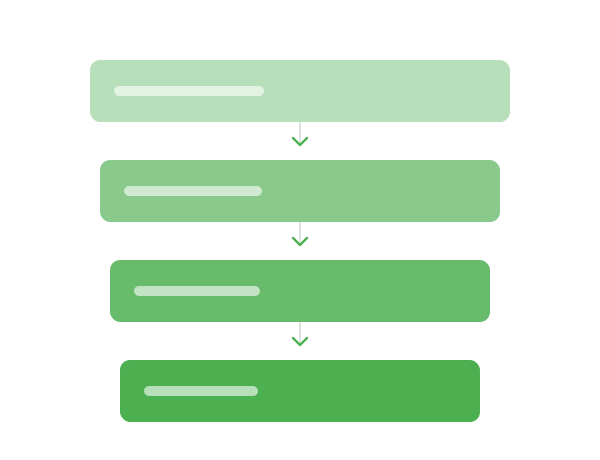
Four layers, and most companies have gaps between all of them
Capture, CRM, automation and reporting each work fine in isolation. The failures happen at the joins: a form that does not write to the right property, a workflow triggered by a field nobody maintains, a dashboard counting something different from the one sales uses.
Routing
Where leads go, and how fast.
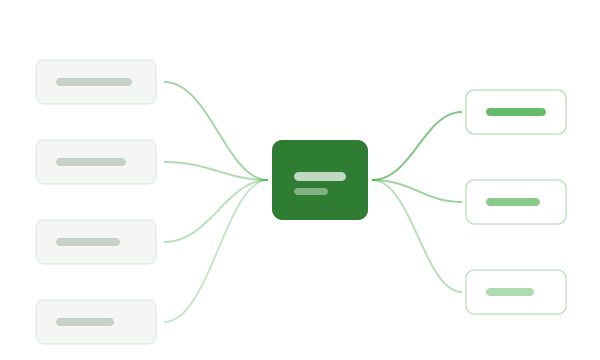
A lead that sits unassigned for two days has already lost most of its value. Routing decides which salesperson gets it, what context arrives with it, and what happens when nobody responds.
The same logic handles the unglamorous work: deduplication, lifecycle stage transitions, ownership rules and the alerting that stops records quietly rotting. None of it is visible in a demo, and all of it decides whether the CRM is trusted six months later.
Scope
Six things that make a stack work.
Implementation is mostly decisions, not clicks. The configuration is the easy half.
CRM configuration
Pipelines, stages, properties and permissions built around how you actually sell rather than the vendor default.
Forms and capture
Every entry point connected, with hidden fields, source attribution and validation that keeps data usable.
Lead routing
Assignment rules, round robin, territory or account ownership, plus escalation when nobody responds in time.
Lifecycle automation
Stage transitions, scoring, task creation and the internal alerts that prompt action at the right moment.
Data hygiene
Deduplication, normalisation, decay rules and the ongoing maintenance that keeps reporting believable.
Dashboards
Reporting that marketing, sales and the board can all read without three different definitions of a qualified lead.
Platforms
We will not push you onto the expensive option.
HubSpot Marketing Hub Professional starts around $890 a month before contacts and seats, with onboarding fees that agencies commonly charge $3,000 to $20,000 for. It is excellent when you genuinely need a connected CRM, marketing and sales platform.
Plenty of companies do not. A leaner CRM plus a dedicated email tool delivers the same outcomes for a fraction of the cost, and we will say so when that is the honest answer, even though the bigger implementation would bill more.
Pricing
Projects and ongoing ownership.
US agencies commonly charge $12,000 to $60,000 for implementations of this kind, with HubSpot onboarding alone quoted at $3,000 to $20,000. These are published fixed prices with the scope written down.
Systems Audit
Map what you have.
$2,450
one-time
- CRM and stack review
- Form and capture inventory
- Tracking and data flow check
- Data hygiene assessment
- Target architecture and fix list
CRM Implementation
Build the foundation.
$8,950
one-time project
- CRM configured to your sales motion
- Pipelines, stages and properties
- Forms and routing connected
- Data migration and cleanup
- Team training and documentation
- Six week delivery
Most chosen
Full Automation Build
The complete system.
$18,950
one-time project
- Everything in CRM Implementation
- Lifecycle automation and scoring
- Attribution and dashboards
- Sales handoff logic
- Integrations across the stack
- Ten week delivery
Managed Operations
Someone owns it after launch.
$3,450
per month
- Workflow maintenance
- Data hygiene monitoring
- Reporting upkeep
- Continuous improvement
- Change requests handled
All prices in USD and exclude software licences, which you buy directly and own.
How much does a CRM implementation cost?
US agencies commonly charge $12,000 to $60,000 or more for marketing automation and CRM implementations, and HubSpot onboarding alone is frequently quoted at $3,000 to $20,000. marive publishes fixed prices: $2,450 for a Systems Audit, $8,950 for a CRM implementation, $18,950 for a full automation build, or $3,450 per month for managed operations.
Which CRM should we use?
Whichever matches your actual complexity rather than your aspirations. HubSpot is strong when you need marketing, sales and service connected in one platform and can justify Professional tier pricing. A leaner CRM with a dedicated email tool is often the better answer for smaller teams, and we will recommend that when it is true.
Why does our CRM data keep going bad?
Almost always because nobody owns it. Without deduplication rules, required fields, normalisation and decay handling, any CRM degrades within months as records accumulate from multiple sources. Data hygiene is maintenance, not a one-time cleanup, which is why it sits inside the managed option.
How long does implementation take?
A CRM implementation typically runs six weeks and a full automation build ten, assuming reasonable access and prompt decisions from your side. Migrations from a messy existing system are the usual cause of delay, and the audit tells you in advance whether yours is one of those.
Do we need the audit before a build?
Not strictly, but skipping it means scoping the build on assumptions. Most companies discover during the audit that some of what they planned to build already exists half-finished, or that the real problem sits somewhere they were not looking. It usually reduces the cost of the build rather than adding to it.
Will our team be able to use it?
That is what the training and documentation are for, and it is the part most implementations skip. A system nobody understands gets worked around within a quarter, and the workarounds are what corrupt the data. We build for the people who will actually operate it.
Can you work with the system we already have?
Yes, and that is usually cheaper than replacing it. Most stacks have the right components badly connected rather than the wrong components. Replacement is a last recommendation, not a default.
Questions
Common questions.
Including which platform not to buy.
Related services
What runs on top.
Analytics, Tracking & Reporting
Measurement built on clean data.
Email Marketing & Nurture
The flows this system runs.
Full-Service Digital Marketing
Operations inside a complete programme.
Find out what you already have.
The Systems Audit costs $2,450 and takes three weeks. Most companies discover they are paying for capability they never configured, and that the fix is smaller than the replacement they were considering.