
Worked Examples
What an engagement actually looks like.
Five detailed scenarios showing how marive approaches a problem: the starting position, the diagnosis, the sequence of work, and the range of outcome the published research supports.
These are illustrative models, not client results. marive publishes client case studies only with the client named, the baseline recorded before work started and written permission on file. We have none that meet that standard yet, and we would rather show you our reasoning than invent evidence. Every figure below is drawn from published industry benchmarks, which are cited, and is presented as a range rather than a promise.
Example 01
Illustrative model, not a client result
Ranked well, never cited
B2B SaaS, roughly $6M ARR, selling into the US and UK
Services
GEO / AI Search Optimisation
The situation
The company ranks on page one for its main category terms and organic traffic is stable. Pipeline from organic has flattened anyway. Sales report that prospects arrive having already shortlisted two competitors, and nobody can explain where that shortlist came from.
What the audit would likely find
A GEO Audit measures the brand across a fixed prompt set on ChatGPT, Perplexity, Gemini and AI Overviews. The likely finding is a familiar pattern: strong rankings, near-zero citations. Content buries its answers below the fold to increase time on page, claims are adjectival rather than verifiable, and the entity record is thin because the same facts appear nowhere except the company site.
The approach
Restructure existing pages so each question is a real heading with a direct answer beneath it. Implement Organization, Service and FAQPage schema so the entity is unambiguous. Attach a number, source or demonstration to every claim. Then build corroboration through listings, profiles and earned mentions so the same facts appear in more than one place.
What the benchmarks support
Published research indicates Perplexity and AI Overviews typically reflect changes within four to eight weeks, while ChatGPT and Gemini generally take three to six months because they lean on corroboration accumulating across the wider web. A realistic first milestone is citation presence on high-intent comparison prompts by the end of the first quarter.
Engagement
GEO Growth
Investment
$4,450 / month
Judge it at
Month 6
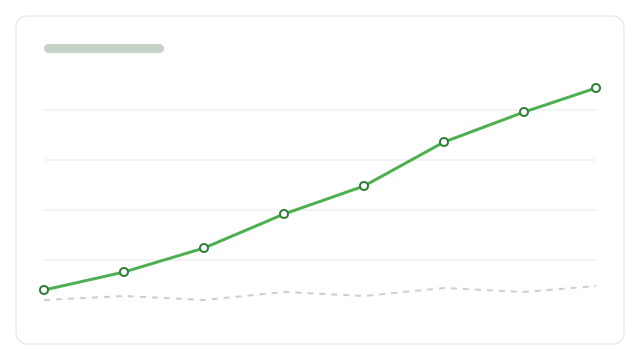
Illustrative shape of the change, not measured client data.
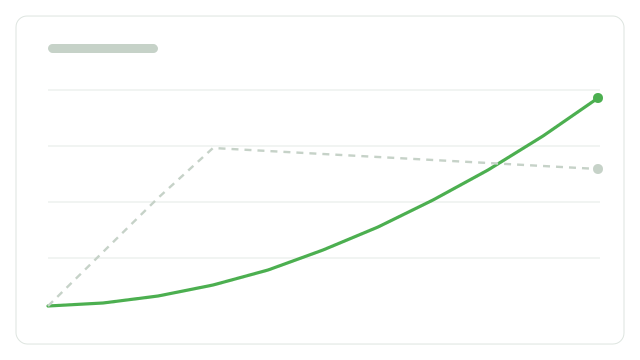
Illustrative shape of the change, not measured client data.
Example 02
Illustrative model, not a client result
Paying rent on traffic
Professional services firm, 40 staff, single market
Services
SEO & Content Marketing
The situation
Roughly eighty percent of lead volume comes from paid search. Cost per acquisition has risen every quarter for two years. The founder describes it accurately as paying rent: the moment spend pauses, the pipeline stops.
What the audit would likely find
An SEO and Content Audit usually finds the same thing at this stage. A blog exists, published inconsistently, covering whatever seemed topical. There is no cluster structure, so no page demonstrates depth on anything. Several pages sit on page two, which means the fastest available wins are pages the company already paid to produce.
The approach
Fix technical debt first, then rebuild existing page-two content before publishing anything new, because updating what exists returns value faster than starting over. Build one pillar cluster properly, supported by pages answering every adjacent question, all internally linked. Then extend to a second cluster.
What the benchmarks support
Industry data puts the average agency SEO retainer near $3,200 per month, with long-tail terms commonly moving within two to three months and competitive terms taking six to twelve. The realistic shape is minimal visible change in the first quarter, meaningful organic contribution by month six, and falling blended cost per lead from month nine as published pages keep earning.
Engagement
SEO Growth
Investment
$6,450 / month
Judge it at
Month 9
Example 03
Illustrative model, not a client result
The offer was the problem
B2B technology company, mid-market, US and Canada
Services
Sales Funnel & Landing Page Strategy
The situation
Paid campaigns deliver traffic at an acceptable cost per click. The landing page converts at just under two percent and the team has spent four months testing headlines, button colours and hero images without moving it.
What the audit would likely find
A Funnel Audit examines the whole path rather than the page. The most common finding, and the least examined one, is that the offer is wrong: the page asks for a demo from people who are still three months from evaluating anything, while offering nothing to those who are merely researching. Form length compounds it, and the follow-up sequence does not exist.
The approach
Redesign the offer before touching the layout. Introduce a genuinely useful lower-commitment entry point alongside the demo request. Cut form fields to what the next step actually requires. Position proof where scepticism peaks rather than in a testimonial block at the bottom. Then test, in that order.
What the benchmarks support
Published CRO benchmarks describe moving a page from around two percent to around four percent as having the same revenue effect as doubling traffic, at a fraction of the cost. Roughly one test in three produces a clear winner, so the honest framing is that a rebuild plus two months of disciplined testing is what a meaningful shift requires.
Engagement
Funnel Build
Investment
$16,950 project
Judge it at
Month 4
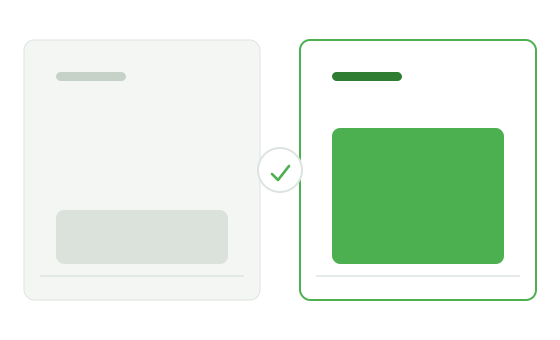
Illustrative shape of the change, not measured client data.

Illustrative shape of the change, not measured client data.
Example 04
Illustrative model, not a client result
Spending more, learning less
Manufacturer entering a new market, US and Australia
Services
Paid Advertising Management & Analytics
The situation
Monthly ad spend has tripled year on year. Google Ads reports strong conversion volume, the CRM shows a fraction of it, and sales dispute the quality of what does arrive. Budget decisions are being made from three sets of numbers that have never agreed.
What the audit would likely find
A Tracking Audit typically explains the discrepancy before any advertising work begins. Events firing more than once inflate platform-reported conversions. Client-side tags lose a meaningful share of real conversions to ad blockers and browser privacy controls. Offline outcomes never return to the platforms, so bidding optimises toward form fills rather than revenue.
The approach
Reconcile definitions between marketing and sales first and write them down. Rebuild event tracking and verify it against real sessions. Implement server-side tracking. Feed closed deals back to the platforms as offline conversions so bidding optimises on outcomes. Only then rebuild the account structure.
What the benchmarks support
Published figures indicate server-side setups typically recover fifteen to thirty percent of the conversions stripped by ad blockers and browser tracking prevention. Recovering that signal usually changes which campaigns appear profitable, which is the actual return: better allocation of spend already committed rather than more spend.
Engagement
Server-Side & Attribution Build
Investment
$14,950 project
Judge it at
Month 3
Example 05
Illustrative model, not a client result
Tactics without a system
Funded B2B company, multi-product, four markets
Services
Revenue Growth System
The situation
Marketing has accumulated rather than been designed. Three agencies, two freelancers and an internal marketer, each competent, none aware of the others. Every quarter starts roughly where the last one did, because nothing built previously made the current quarter easier.
What the audit would likely find
A Revenue Audit examines all five subsystems together: positioning, demand, conversion, retention and measurement. The recurring finding is that no single part is failing badly. The failure is at the joins, and because no one owns the whole, the weakest subsystem silently caps every other one.
The approach
Sequence matters more than effort. Settle positioning first, because every downstream conversion rate inherits its efficiency. Fix measurement second, so decisions after it are defensible. Rebuild conversion paths third. Only then scale demand, and reallocate budget quarterly on evidence rather than negotiation.
What the benchmarks support
For context, a comparable in-house function costs well over $600,000 a year fully loaded, and multi-service agency engagements for funded B2B companies commonly land between $10,000 and $25,000 per month. The compounding argument is specific: sharper positioning raises conversion on every page, higher conversion lowers acquisition cost on every channel, and content produced for search also serves AI citation, sales enablement and nurture.
Engagement
Revenue Partner
Investment
$12,950 / month
Judge it at
Month 12
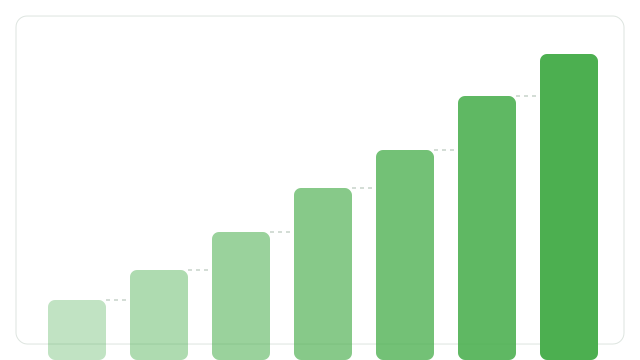
Illustrative shape of the change, not measured client data.
Why there are no client names here yet
We will not publish evidence we cannot stand behind.
A case study is a claim about a real company with real numbers. Publishing one requires the client named or their sector described with their agreement, a baseline recorded before work began, the result measured against that baseline, and written permission on file. Anything short of that is decoration wearing the costume of proof.
When engagements meet that standard they will appear here, with the starting figure printed next to every percentage. Until then you get our reasoning, our benchmarks and our prices, which is more than most agencies will show you before a call.
Find out which of these you actually are.
Every engagement starts with a fixed-price audit between $1,450 and $3,450. It produces a written diagnosis of your situation and a prioritised roadmap, and you keep it whether or not you continue with us.