
Analytics, Tracking & Reporting
If the numbers are wrong, every decision after them is too.
A $1,850 Tracking Audit verifies every conversion event end to end, finds what is double counting, what is missing entirely, and why marketing and sales disagree about the same month. Two weeks.
The problem
Three systems, three different answers.
Google Ads reports 40 conversions. GA4 reports 26. The CRM shows 18 leads and sales recognises 11 of them as real. Everyone is looking at a dashboard and everyone is describing a different month.
The instinct is to argue about which number is right. All of them are, within their own definitions. The problem is that nobody agreed the definitions, and until someone does, the reporting cannot settle any argument it is asked to settle.
Diagnosis
Five ways measurement breaks.
In roughly the order we find them.
01
Events fire more than once
A tag installed twice, or firing on both a page view and a button click, inflates conversions and quietly corrupts every optimisation decision built on them.
02
Consent and blockers remove signal
A meaningful share of client-side conversions never arrive. Server-side tracking commonly recovers fifteen to thirty percent of what blockers and browser privacy limits strip out.
03
Definitions drift between teams
Marketing counts a form fill. Sales counts a qualified conversation. Finance counts closed revenue. Nobody is wrong and the reports never reconcile.
04
Offline conversions never return
The deal closes on a call and the platform never learns which campaign produced it, so bidding optimises toward the wrong signal for months.
05
Attribution is treated as truth
Platform-attributed revenue summed across channels routinely exceeds real revenue, because every platform claims the same conversion.
Signal
Getting back what you already earned.
Ad blockers, Safari tracking prevention and consent refusals remove a large share of client-side conversion data. Those conversions still happened. Your platforms just never heard about them, so bidding algorithms optimise on a partial picture.
Server-side tracking typically recovers fifteen to thirty percent of that lost signal, which is usually enough to change which campaigns look profitable. At meaningful ad spend the build pays for itself within a quarter.
One honest limit: consent refusals stay refused. Anyone promising to recover declined consent is describing a compliance problem, not a tracking feature.
Architecture
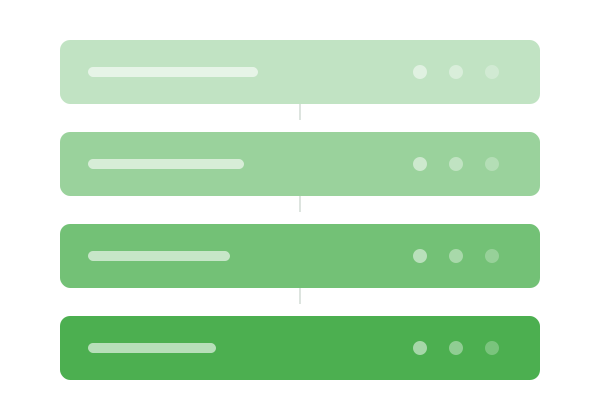
Four layers, built in order.
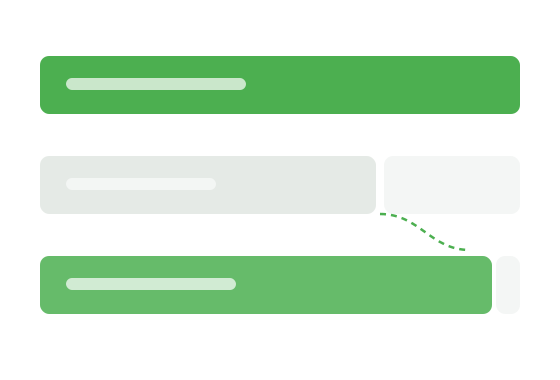
Collection captures what happened. Processing cleans and deduplicates it. Modelling assigns credit across touchpoints. Reporting presents it to people who need to make a decision this week.
Most companies buy a dashboard tool and skip the first three layers, then wonder why the dashboard disagrees with reality. Fixing reporting without fixing collection produces a prettier version of the same wrong number.
What we build
Six components of a measurement system.
Not all of them are needed by every company. The audit says which.
Tracking plan
A written specification of every event, property and definition, agreed with marketing and sales before anything is implemented.
GA4 and GTM build
Clean container, correct event structure, key events configured, internal traffic excluded and cross-domain handled.
Server-side tracking
A server-side container that recovers signal lost to blockers and privacy controls, with consent respected throughout.
Offline conversion imports
Closed deals fed back to the ad platforms so bidding optimises toward revenue rather than form fills.
Attribution modelling
Data-driven attribution set up properly, with blended efficiency used as the guardrail against platform over-claiming.
Dashboards
One set of numbers that marketing, sales and the board all read the same way, refreshed automatically.
Process
Five weeks, and you own the documentation.
Implementations that live in one contractor head are a liability. Everything is written down.
Week 1
Discovery
Access granted, current implementation crawled, and interviews with whoever uses the numbers to make decisions.
Week 2
Tracking plan
Every event, property and definition written down and agreed by marketing and sales before implementation starts.
Week 3 to 4
Implementation
Containers rebuilt, events deployed, server-side configured where in scope, everything QA tested against real sessions.
Week 5
Handover
Dashboards delivered, documentation written and the team trained on what each number means and where it comes from.
Tools
GA4 is free. Measurement is not.
The software costs nothing for almost every business below enterprise volume. What costs money is deciding which events matter, defining them consistently, validating that they fire correctly, excluding internal traffic and confirming the reports describe reality rather than noise.
Analytics 360 starts around $50,000 a year and almost nobody reading this needs it. Attribution platforms start around $129 a month and are worth it above roughly $10,000 in monthly ad spend. We will tell you when a free tool is sufficient, which is more often than vendors suggest.
Ongoing
Tracking decays without maintenance.
Every site release risks breaking a tag. Platforms change their APIs. Someone adds a form without telling anyone. Within six months an unmaintained implementation is quietly wrong again, and nobody notices until a quarterly number looks strange.
The retainer covers tag governance, ongoing QA against real sessions, dashboard upkeep and a monthly report. Market rates for this sit around $1,000 to $5,000 a month; ours is $2,450.
Fit
When this is worth doing.
Measurement work pays back in proportion to what you spend on the decisions it informs.
Worth doing now
- Meaningful ad spend where signal loss changes decisions
- Marketing and sales disagree about the same numbers
- Long or multi-touch sales cycles
- A CRM that holds the real outcome data
- You are about to increase budget significantly
Probably premature
- Very low traffic and few conversions per month
- No paid spend and a single conversion action
- Nobody available to act on what the data shows
- The website itself is about to be rebuilt
- You want a dashboard rather than correct numbers
Pricing
Published measurement pricing.
Market rates put a GA4 audit and setup at $2,000 to $10,000, server-side builds at $5,000 to $25,000, and ongoing tag governance at $1,000 to $5,000 a month. These sit inside those bands with scope written down.
Tracking Audit
Find out what is wrong.
$1,850
one-time
- Every event verified end to end
- Duplicate and missing events found
- Definitions reconciled across teams
- Signal loss estimated
- Ranked fix list
Most chosen
Measurement Build
Rebuild it properly.
$6,450
one-time project
- Written tracking plan
- GA4 and GTM rebuilt
- Key events configured
- Dashboards delivered
- Documentation and training
- Five week delivery
Server-Side & Attribution
Recover the lost signal.
$14,950
one-time project
- Everything in Measurement Build
- Server-side tracking container
- Offline conversion imports
- Attribution modelling
- Executive dashboards
- Nine week delivery
Reporting Retainer
Keep it accurate.
$2,450
per month
- Tag governance
- Ongoing QA against real sessions
- Dashboard maintenance
- Monthly reporting
- Change requests handled
All prices in USD and exclude any third-party software licences.
Questions
Common questions.
Including where the free tool is the right answer.
How much does analytics implementation cost?
Market rates in 2026 put a GA4 audit and setup at $2,000 to $10,000, server-side tracking builds at $5,000 to $25,000, and warehouse-native stacks from $25,000 upward, with ongoing tag governance at $1,000 to $5,000 per month. marive publishes fixed prices: $1,850 audit, $6,450 measurement build, $14,950 server-side and attribution build, or $2,450 per month ongoing.
Is Google Analytics 4 free?
The software is free for essentially every business below enterprise traffic volumes, and Analytics 360 starts around $50,000 a year for organisations that genuinely exceed those limits. What is not free is implementation: deciding which events matter, defining them consistently, validating they fire correctly and confirming reports reflect reality.
Why do Google Ads, GA4 and our CRM report different numbers?
Because each counts a different thing over a different window with a different attribution model, and platform-attributed conversions summed across channels routinely exceed real blended revenue since every platform claims the same conversion. The fix is agreeing definitions first, then treating blended efficiency as the guardrail.
What is server-side tracking and do we need it?
Server-side tracking sends conversion data from your own server rather than the visitor browser, which recovers signal that ad blockers and browser privacy controls remove. It typically recovers fifteen to thirty percent of lost conversions, so it becomes worthwhile once ad spend is high enough that a fifteen percent data gap changes your decisions.
Can you recover data lost to cookie consent refusals?
No, and anyone claiming otherwise is describing a compliance problem. Server-side tracking improves the handling of signal users have allowed. Refused consent stays refused, and any vendor promising to work around that is offering you legal risk.
How long does an implementation take?
A measurement build typically runs five weeks and a server-side and attribution build nine, assuming reasonable access and prompt decisions. Reconciling definitions between marketing and sales is usually the slowest part, because it is a business conversation rather than a technical task.
Do we need the audit before a build?
Not strictly, but building on an unexamined implementation means carrying its problems forward. The audit frequently reduces the cost of the build by revealing that parts of what you planned already work, or that the actual problem sits elsewhere.
Who owns the setup afterwards?
You do. Everything sits in your accounts, the tracking plan and documentation are yours, and the team is trained on it. Implementations that only one contractor understands are a liability, not a service.
Related services
What depends on this.
Marketing Automation & CRM
Where the outcome data lives.
Paid Advertising Management
What accurate signal makes cheaper.
Conversion Rate Optimisation
Testing needs trustworthy measurement.
Find out whether your numbers are real.
The Tracking Audit costs $1,850 and takes two weeks. Every conversion event verified, every discrepancy explained, and a ranked list of what to fix. Most companies find at least one number they have been reporting to the board for months is wrong.