
Email Marketing & Nurture Sequences
Most of your leads are not ready. Email is how you wait.
A $1,450 Email and Lifecycle Audit checks deliverability, list health, existing flows and segmentation, then maps the sequences you are missing. Two weeks, fixed price.
The problem
The follow-up gap.
A visitor downloads something, gets one automated thank-you, and then hears nothing. Three weeks later a salesperson calls, finds them cold, and marks the lead as poor quality. The lead was fine. The gap in the middle was the problem.
Most B2B buyers are not ready when they first raise a hand. Email is the only channel that lets you stay present through that wait at almost no marginal cost, provided somebody has built the sequences and keeps them current.
The flows
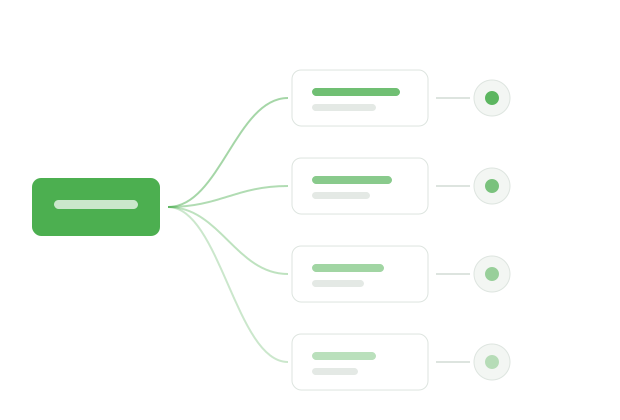
Five sequences that do the work.
Built once, maintained continuously, and running whether or not anyone remembers to send a campaign that week.
01
Welcome and orientation
What happens in the first fourteen days after someone joins. Sets expectations, establishes voice and identifies who is actually engaged.
02
Lead nurture
Educational sequences by segment and stage, moving someone from problem-aware to solution-aware without pitching every time.
03
Sales handoff
Triggered when behaviour signals readiness. Alerts the right salesperson with context, and warms the prospect for the call.
04
Re-engagement
For contacts who went quiet. Recovers a meaningful share of a list you already paid to build.
05
Post-sale and expansion
Onboarding, adoption and the upsell conversation, which is where retention revenue is usually left on the table.
Segmentation
One list is not a strategy.
Sending everything to everyone trains people to ignore you, and unsubscribes are the visible cost while quiet disengagement is the expensive one.
Segments are built from behaviour and stage rather than job title alone: what they read, what they ignored, how recently, and where they sit in the buying process. The same email sent to the right third of a list outperforms the whole list every time.
Pricing
Published email pricing.
Fixed monthly fees by scope, excluding your email platform subscription which you own directly.
Email & Lifecycle Audit
Check the plumbing first.
$1,450
one-time
- Deliverability and authentication check
- List health and engagement analysis
- Existing flow review
- Segmentation assessment
- Prioritised lifecycle map
Lifecycle Foundations
Core flows, running properly.
$2,250
per month
- Welcome and nurture flows built
- Segmentation implemented
- One campaign monthly
- Deliverability monitoring
- Monthly reporting
Most chosen
Nurture Engine
The full lifecycle.
$4,250
per month
- All five core sequences
- Behavioural triggers
- Sales handoff automation
- Two to four campaigns monthly
- Subject and content testing
- Monthly strategy call
Revenue Programme
Volume and sophistication.
$7,450
per month
- Multi-segment lifecycle
- Dynamic and conditional content
- Account-based sequences
- Dedicated deliverability management
- Weekly reporting
All prices in USD. Monthly billed first month at checkout, invoiced thereafter, three-month minimum.
Questions
Common questions.
How much does email marketing management cost?
B2B email and lifecycle retainers commonly run $2,000 to $8,000 per month depending on the number of flows, campaign volume and segmentation complexity. marive publishes fixed pricing: $1,450 for a one-time audit, then $2,250, $4,250 or $7,450 per month.
What is a nurture sequence?
A nurture sequence is an automated series of emails that moves someone from initial interest toward readiness to buy, triggered by an action they took rather than sent on a fixed schedule. It exists because most B2B buyers are not ready when they first make contact, and the alternative to nurturing them is losing them.
Why are our emails going to spam?
Usually authentication, reputation or list hygiene rather than content. Missing or misconfigured SPF, DKIM and DMARC records are the most common cause, followed by sending to unengaged contacts for months, which teaches inbox providers that recipients do not want your mail. The audit checks all of it.
Which email platform should we use?
Whichever integrates cleanly with your CRM and matches your actual complexity. HubSpot Marketing Hub Professional starts around $890 per month and makes sense when you need the connected CRM; dedicated email tools deliver the same sending outcomes for far less if you do not. We will not push you toward the expensive option.
How often should we email our list?
Frequency matters less than relevance. A well-segmented monthly send outperforms a weekly newsletter that ignores what people care about. Once behavioural segmentation is in place, most B2B programmes settle at two to four touches per month per segment.
Do you write the emails?
Yes, and we build the flows, set the triggers and maintain them. You approve the content, and where the message depends on genuine product expertise we interview your team rather than inventing it.
Can you fix an old, unengaged list?
Often, partly. A re-engagement sequence usually recovers a meaningful share, and the rest should be suppressed rather than kept, because continuing to mail people who never open damages deliverability for everyone else. Shrinking a list is frequently the fastest way to improve results.
Related services
What email connects to.
Marketing Automation & CRM
The system the flows run on.
Sales Funnel & Landing Pages
How contacts enter the list.
SEO & Content Marketing
The material nurture sequences carry.
Find out what is leaking after the form.
The Email and Lifecycle Audit costs $1,450 and takes two weeks. Deliverability, list health, existing flows and the sequences you are missing, with a map of what to build first.